
Driving in Thailand: Essential Safety Tips | TowGrab
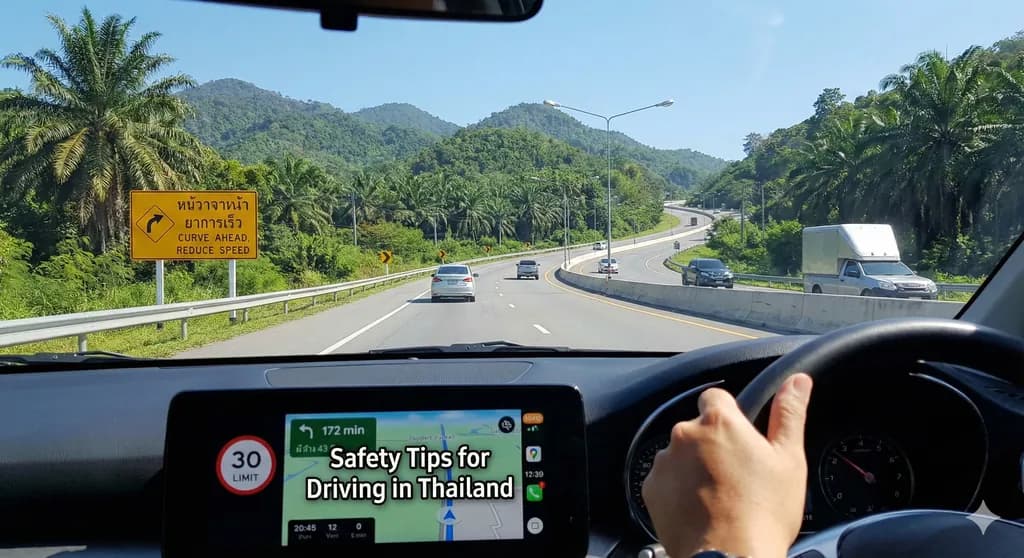
Master the chaos of Thai roads. From motorbike awareness to unwritten rules and U-turn etiquette, here is everything you need to drive safely in Thailand.


Thailand is known as the "Land of Smiles," but its roads can sometimes induce more frowns than grins. With a mix of high-speed highways, congested city streets, and a unique driving culture, getting behind the wheel here requires a specific set of skills and awareness.
Whether you are an expat adjusting to life in Bangkok or a tourist planning a road trip to Chiang Mai, understanding the "unwritten rules" of Thai roads is just as important as knowing the traffic laws.
1. The Basics: Left is Right
First things first: Thailand drives on the left. The driver sits on the right side of the car.
- Overtaking: Always overtake on the right. However, be prepared for vehicles (especially motorbikes) to undertake you on the left.
- Right of Way: At an uncontrolled intersection or roundabout, give way to vehicles coming from your right.
2. The Motorbike Factor
There are over 20 million motorbikes in Thailand. They are the lifeblood of the transport system, but they are also the biggest hazard for car drivers.
The "Filter" Effect
At traffic lights, motorbikes will filter through the gaps between cars to get to the front.
- Tip: When stopped at a light, leave a little gap between your car and the lane markings to allow bikes to pass. If you block them, you risk getting your mirror clipped.
The Blind Spot
Check your left mirror constantly. Before turning left into a soi (alley) or parking spot, assume there is a motorbike coming up on your inside. This is the most common cause of accidents involving foreigners.
3. The "Unwritten Rules" of Thai Roads
Some local habits are the opposite of what you might expect in the West.
Flashing Headlights
In the UK or US, flashing your lights usually means "Go ahead, I'm letting you in."
In Thailand, it means: "I am coming through! Do not pull out!"
If you see a car approaching fast with lights flashing, stay put.
The Hazard Light Confusion
Some drivers use hazard lights to indicate they are going straight through an intersection. This is dangerous and illegal, but it happens. If you see a car with hazards on at a crossroad, be very careful—you don't know if they are turning or going straight.
4. Mastering the U-Turn
U-turns are a fundamental part of Thai road design. You will often need to make a U-turn to get to a destination on the other side of a divided highway.
- The "Thai U-Turn": On highways, U-turn bridges are common. On smaller roads, U-turns are at ground level.
- The Danger Zone: When approaching a U-turn slot, the right lane will often slow down or stop completely. If you are not turning, stay in the middle or left lane.
- Motorbikes: Watch out for motorbikes making U-turns from the left shoulder, cutting across three lanes of traffic to get to the U-turn slot.
5. Road Conditions & Weather
Potholes and Sois
Main highways are generally good, but secondary roads can be riddled with potholes. "Sois" (alleys) in Bangkok can be extremely narrow, often with two-way traffic on a one-lane road.
Rainy Season (May - October)
When it rains in Thailand, it pours. Flash floods can occur within minutes.
- Hydroplaning: Slow down significantly.
- Flooded Roads: If you see standing water, watch other cars first. If the water reaches the bottom of their doors, do not attempt to cross.
- Wipers: Replace your wiper blades before the rainy season starts.
6. Police Checkpoints and Fines
You will encounter police checkpoints, especially during holidays (Songkran, New Year).
- License: Always carry your driving license. An International Driving Permit (IDP) is required for tourists.
- Fines: If you are stopped for a violation, remain calm and polite. Losing your temper will only make things worse.
7. What to Do in an Accident
If you are involved in a minor accident (fender bender):
- Do not move the vehicles unless instructed by police or insurance, or if it's causing a massive traffic jam (take photos first!).
- Call your insurance company immediately. They will send a surveyor to the scene.
- Call TowGrab if your car is not drivable. We can tow it to your preferred garage or dealer.
Essential Emergency Numbers
- Tourist Police: 1155
- Emergency (Police/Ambulance): 191
- Highway Police: 1193
- TowGrab Assistance: 02-000-0000
Conclusion
Driving in Thailand is an adventure. By staying defensive, expecting the unexpected, and keeping your cool, you can navigate the roads safely.
And remember, no matter where your journey takes you, TowGrab Roadside Assistance is always ready to help if things go wrong.